Guilt, Grief, and Grace: My Mother Search for Self, Family, and Place
Coming This Winter | University of Utah Press
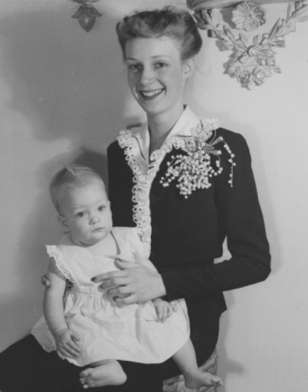
| My mother, Francine, left me, my younger brother, and my father when I was three. In the summer of 1946, she took the two of us to a babysitter and never returned. She had the security of a family, a house, and Salt Lake’s tight Mormon community. Why did she walk out and leave her own children? I’m now a mother myself of two and grandmother of three, the most cherished loves of my life. Understanding why she left is core to my knowing Francine, my mother, and knowing myself. For the next two decades, my extended family kept a wall of silence about Francine: nothing spoken, heard, or seen. Her name disappeared. Her photos disappeared. No good, no bad, just verbal and visual silence. Growing up, I created stories of a fantasy mother, one I told my adventures to as I fell asleep, only to later discover she created stories about a daughter, year after year, just as I had done. We met twenty years later, but needed added years to peel away fears of repeated rejection. In the early years together, we tiptoed with words to not offend. Forgiveness and love require time, lots of time. We eased into exposing our vulnerabilities: her missing breast to cancer, my divorcing a husband who came out as gay. With each increasingly honest word, our eyes showed trust and love. We became one, as we were before she gave birth to me in December 1942, after twenty-four hours of painful labor. Did the decades apart make us more or less loving? I only know that the mutual loss later gave me, gave us, an intimacy close to what twins can share. She and I met twenty years after she disappeared, and we slowly rebuilt lost love. But I still asked myself how, in one moment, she could pull my brother’s clinging, chubby fingers from her own, turn her back, and walk out the door. As I write about her life, I better understand, which brings me love and forgiveness. When Francine passed away six years ago at ninety-six, she left carefully written and typed memories of moments in her life. I have reached into these words and our later conversations, and conversations with my sister Cindy, cousins and friends, to seek out why she left us. I ponder how years of separation and silence impacted Francine and me, as well as how our own frailties and strengths reunited us. But even as I come up with some answers, the ‘why’ of leaving two children will linger as long as anyone has memories. Who is the real Francine? Will she please stand up and speak for herself? Am I speaking for her? I’m doing my best, but I’m her daughter, and the story is complicated. I love Francine deeply: my mother and my emotional twin. For thirty years, we laughed, traded clothes and scarves, practiced looking braver than we felt, and shared limitless curiosity. Under this joy, however, lay the sadness of missing the early decades of intimacy connecting a mother and daughter. # |
| This book is more than Francine’s story. Today’s resurgence of expressing traditional family roles for women, as seen, for example, on Tradwives streaming media, recreates times today similar to Francine’s early life ninety years ago with its adherence to tight social, religious, and community boundaries. |